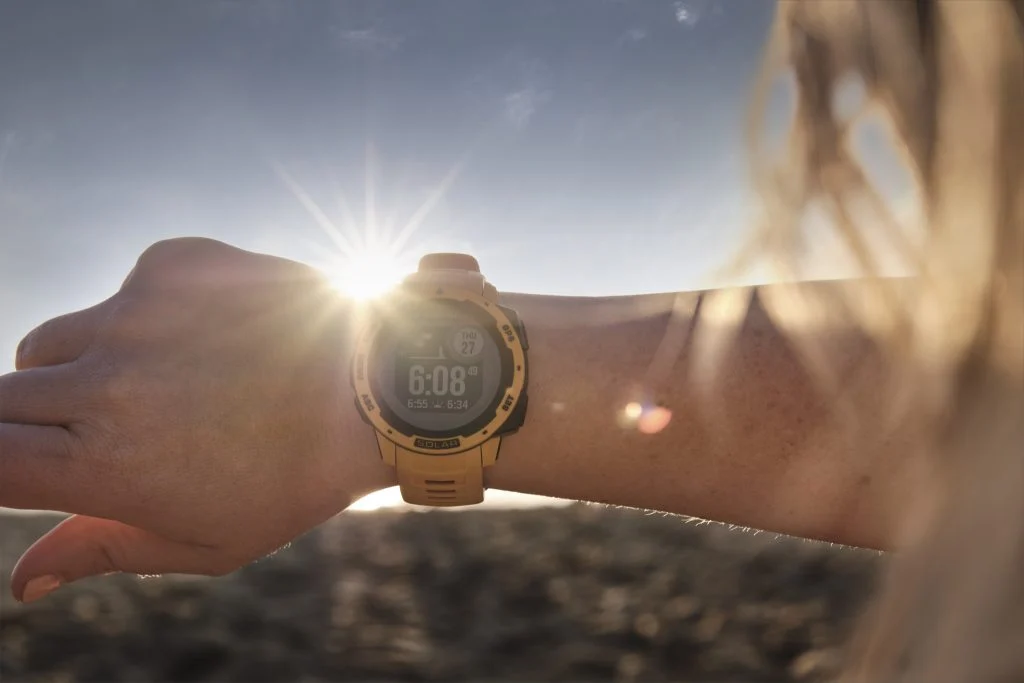
Garmin might soon face tough competition in the outdoor smartwatch market. While Garmin is busy swapping its legendary outdoor watches over to bright, power-hungry AMOLED screens, another major brand is quietly looking to step into the gap they are leaving behind.
A new leak reveals that Amazfit is actively developing a smartwatch that can charge itself using sunlight.
Clues Hidden in the App Code
The discovery comes from the software that powers Amazfit devices. Tech researchers dug into the code of the latest Zepp Health app (version 10.5.0) and found a goldmine of new data strings.
While older versions of the app had small hints about solar tracking, this new update adds highly specific features. The app can now read “solar intensity,” which measures exactly how much sunlight is hitting the face of the watch.
Even more interesting, the code splits the incoming power into different categories, like “watch face input power” and “case back input power.” This means the watch will show you exactly how much battery life you are gaining from the sun versus a standard wall charger.
Why Garmin is Leaving Money on the Table
For years, Garmin has been the king of solar watches, like the Fenix 8 Solar. These watches use special Memory-in-Pixel (MiP) displays that require almost no electricity to run. When you combine that screen with solar panels built into the glass, the battery life is massive—sometimes jumping from 48 days to over 100 days in power-saving mode.
However, Garmin is slowly abandoning this technology. Their newest high-end models are shifting toward gorgeous, bright AMOLED or MicroLED screens. While these screens look beautiful, they drain the battery fast. Even in power-saving modes, these newer screens only last about two weeks.
What to Expect from the New Amazfit
Because solar panels do not generate enough juice to keep a bright AMOLED screen alive, tech experts believe Amazfit will use an old-school screen for this new watch. They will likely use a “transflective” or ePaper display, similar to what Garmin used for years.
Amazfit actually has experience with this. Back in 2020, they released a budget watch called the Amazfit Bip S. It used a similar screen and lasted an incredible 40 days on a single charge without any solar help at all.
Zepp Health has not officially announced the watch yet, and we do not have a release date or price. But the code proves the technology is ready, and Amazfit is getting ready to give outdoor adventurers the ultra-long battery life they have been missing.
You May Also Like To Check Out: The New and Latest Smartwatches 2026