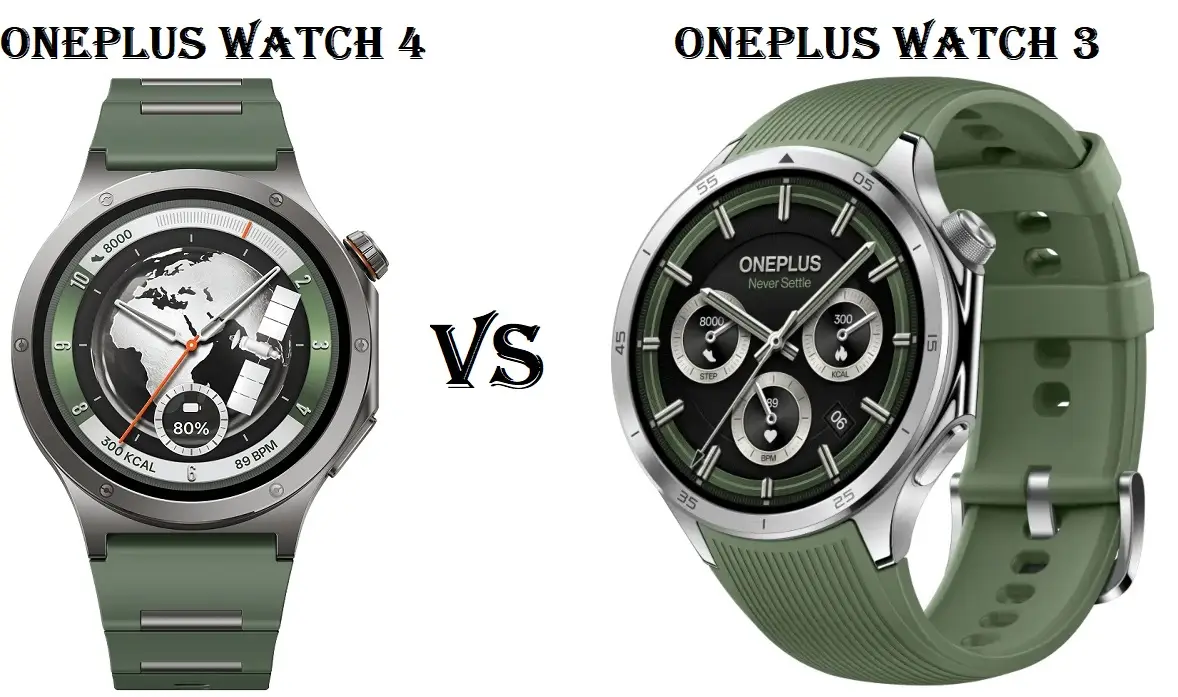
If you’ve been following the OnePlus wearable journey, you know the Watch 3 was the moment the brand finally hit its stride. It brought us dual-engine efficiency and a screen that could actually compete with the sun. Now, with the OnePlus Watch 4 hitting the shelves, the question isn’t whether it’s a good watch—it’s whether it does enough to pull you away from the already excellent Watch 3.
After spending some time looking at the specs, here is how these two flagships actually stack up.
The Build: Moving Beyond Stainless Steel
The Watch 3 was a premium device, but it was a “hefty” one. Its stainless steel build had a reassuring weight, but you definitely felt it during a long run or while sleeping.
The OnePlus Watch 4 shifts the strategy to Full Titanium Alloy. This is the biggest “quality of life” change. Titanium is famously stronger yet significantly lighter. Even though the Watch 4 has a larger battery, the watch actually feels more nimble on the wrist.
We also see the rotating crown move from a functional button to a much more refined, haptic-heavy navigation tool. If you’re tired of swiping on a sweaty screen mid-workout, the mechanical feel of the Watch 4 crown is a noticeable step up.
Display: Pushing the 3,000 Nit Barrier
Let’s talk about that screen. The Watch 3 was already a beast with its 2,200-nit peak brightness—honestly, for most people, that was already class-leading.
However, the Watch 4 pushes that ceiling even further to 3,000 nits. Is it a massive jump? In everyday indoor use, you won’t notice much. But if you’re an outdoor enthusiast—think high-altitude hiking or cycling in direct summer glare—that extra 800 nits ensures the maps and metrics are crisp and “painted on” rather than washed out. Plus, the transition to a more efficient LTPO OLED panel means the Always-On Display (AOD) isn’t the battery hog it used to be.
Performance and AI: The Gemini Shift
Both watches run the dual-engine architecture that we’ve come to love, but the Watch 4 optimizes the “efficiency” side of the house.
-
The Brains: While the Watch 3 used the BES 2700 for background tasks, the Watch 4 moves to the BES 2800. This makes the switch between the low-power RTOS and the full Wear OS feel almost instantaneous.
-
The Intelligence: The Watch 4 is built for Wear OS 6, which places Google Gemini at the center. It handles AI-driven smart replies and voice queries with much less friction than the Google Assistant setup on the 3.
-
Storage Consistency: OnePlus has opted to stay with 32GB of storage and 2GB of RAM. While it’s not an increase over the Watch 3, it remains plenty of room for your essential Spotify playlists and offline maps.
Battery Life: Same DNA, Better Endurance
OnePlus has somehow managed to shove a 646mAh battery into the Watch 4’s thinner frame (compared to the 500mAh in the 47mm Watch 3).
-
Watch 3: A solid 4-day performer.
-
Watch 4: Pushes into the 5-day (100+ hour) territory in full Smart Mode.
And because it’s OnePlus, the VOOC Fast Charging is still here. You can basically get a day’s worth of power in the time it takes to brew a cup of coffee.
Health and Durability: Going “Pro”
The Watch 3 was already rugged, but the Watch 4 adds IP69 to its resume. This isn’t just about depth; it’s about high-pressure resistance. If you’re into water sports or just want a watch that can survive a high-pressure shower, this is a significant durability boost.
On the health side, the new Wrist Temperature Sensor is the standout. It adds a layer of recovery data—tracking how your body reacts to sleep and stress—that provides a more complete picture of your health compared to the previous model.
The Verdict: Should You Swap?
If you own a OnePlus Watch 3, you’re still wearing one of the best Android watches on the market. With 2,200 nits and a great dual-engine setup, you aren’t exactly “hurting” for an upgrade.
However, the OnePlus Watch 4 is for the person who wants the absolute ceiling of specs. The move to Full Titanium, the 3,000-nit LTPO screen, and the increased battery capacity make it the most “complete” wearable OnePlus has ever made. It’s lighter, brighter, and lasts longer—it’s the “Never Settle” philosophy refined to a T.
You May Also Like To Check Out: The New and Latest Smartwatches 2026