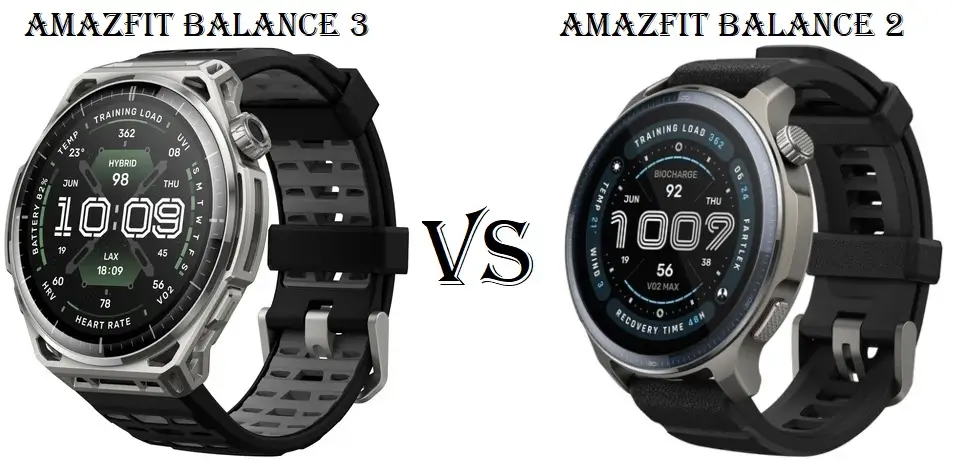
Amazfit just launched the Balance 3, and if you are using the Balance 2, you are probably wondering if it is worth upgrading. Both are great watches for fitness and daily life, but they have some clear differences.
Here is a simple breakdown of what is new and how they compare.
Design and Display: A Huge Brightness Jump
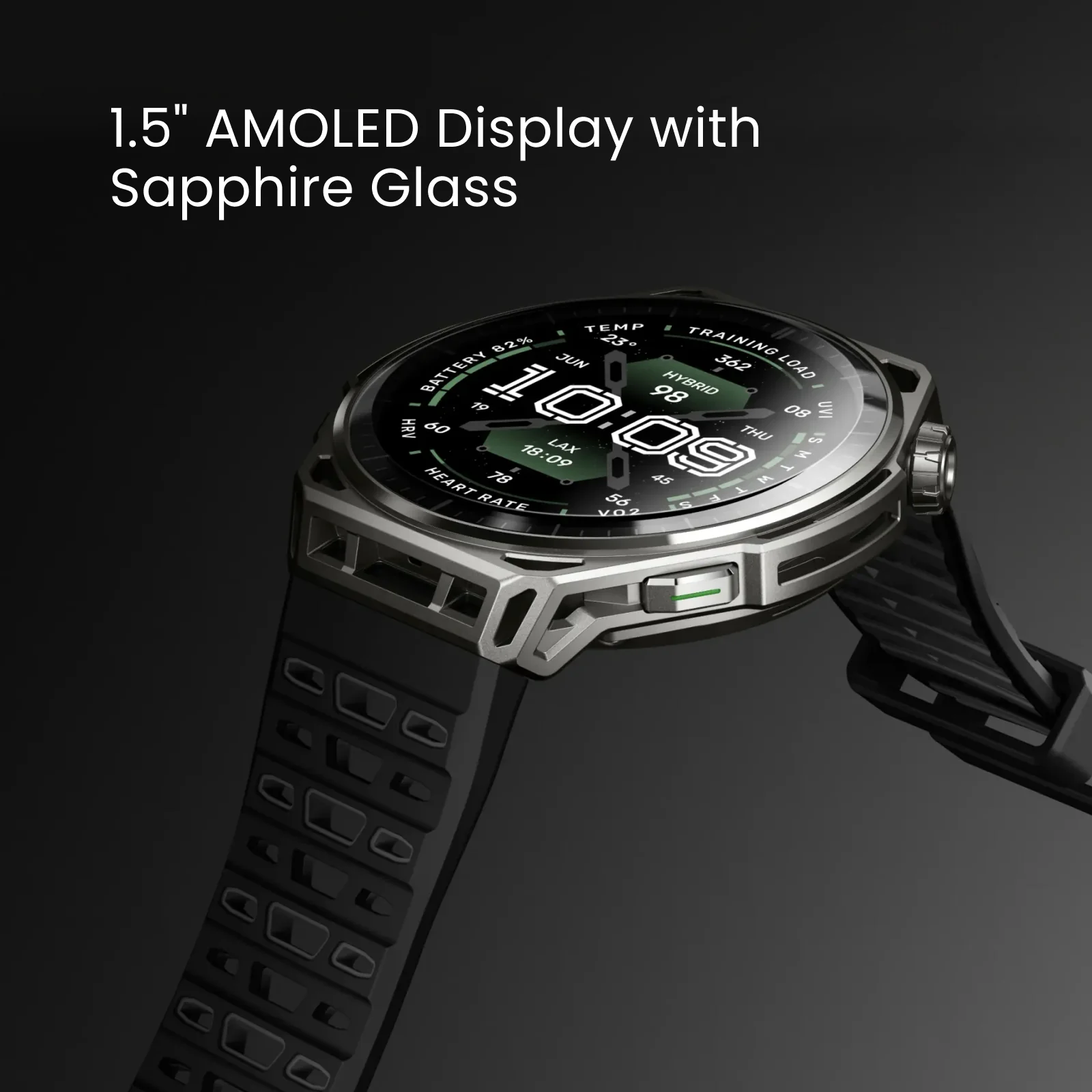
At first glance, both watches look quite similar. They both feature a premium circular design with a 1.5-inch AMOLED screen protected by tough sapphire glass. However, the biggest change is how bright the screen can get.
-
Amazfit Balance 2: The screen reaches up to 2,000 nits of peak brightness. This is already very bright and easy to read outside.
-
Amazfit Balance 3: The screen goes all the way up to 3,000 nits. If you spend a lot of time running or racing under direct, intense sunlight, this extra brightness makes the screen incredibly clear.
Also, the Balance 2 used an aluminum alloy frame and came mostly in black. The Balance 3 steps things up with a Stainless Steel finish for the base model, and Amazfit is planning a lighter Titanium version for later.
Storage: Double the Space
If you like to store music or offline maps directly on your wrist, storage space matters a lot.
-
Amazfit Balance 2: Comes with 32 GB of internal storage.
-
Amazfit Balance 3: Doubles that to 64 GB. This gives you much more room for maps and audio files, so you can leave your phone at home during long workouts.
Features and Software
Both watches are built around fitness, recovery, and excellent tracking. They both use the high-end BioTracker 6.0 sensor, offer dual-band GPS with six satellite systems, support offline maps, and include official training tools for HYROX racing.
The Balance 3 introduces a few new software metrics in the Zepp App to help you manage your day:
- One of the most unique additions to the Balance 3 is a feature called HybridCharge. While both watches give you a massive 21 days of battery life for normal daily use, the Balance 3 introduces this new charging logic to handle high-intensity tracking and power management better when you are pushing the watch to its limits during heavy training blocks.
-
HYROX Race Mode Strategy & Virtual Pace: You can set up your pacing goals before the event. During the race, a virtual pacer keeps you on track so you do not burn out too early on the runs or the functional stations.
-
Race Simulations & Training Plans: The watch includes structured hybrid training plans to prepare your body for the unique demands of these events, as well as simulations to test your fitness before race day.
-
Advanced Post-Race Analytics: After you cross the finish line, the Zepp App breaks down your cumulative race time, gives you a detailed look at your station performance, tracks your pacing consistency, and even estimates your rankings.
Battery Life: Still a Powerhouse
The good news is that Amazfit did not sacrifice battery performance for the brighter screen. Both the Balance 2 and the Balance 3 promise up to 21 days of battery life with typical use. You still get three full weeks of tracking without worrying about the charger.
Full Specification Comparison
| Feature / Spec | Amazfit Balance 2 | Amazfit Balance 3 |
| Display Size | 1.5-inch AMOLED | 1.5-inch AMOLED |
| Resolution | 480 x 480 pixels (323 PPI) | 480 x 480 pixels (323 PPI) |
| Peak Brightness | Up to 2,000 nits | Up to 3,000 nits |
| Screen Protection | Sapphire Glass | Sapphire Glass |
| Case Materials | Aluminum Alloy frame, fiber-reinforced polymer lower shell | Stainless Steel frame (Titanium option releasing later), polymer lower shell |
| Dimensions | 47.4 x 47.4 x 12.3 mm | 51.4 x 51.4 x 12.5 mm |
| Weight (without strap) | 42g | Stainless Steel: 62g Titanium Black: 55g |
| Strap Width | 22 mm | 22 mm |
| Onboard Storage | 32 GB | 64 GB |
| Battery Capacity | 658 mAh | 658 mAh |
| Typical Battery Life | Up to 21 days | Up to 21 days |
| Charging Intelligence | Standard Charging | Standard Charging |
| Biometric Sensor | BioTracker 6.0 PPG (8PD + 2LED) | BioTracker 6.0 PPG (8PD + 2LED) |
| Satellite Positioning | Circularly polarized dual-band GPS, 6-satellite positioning | Circularly polarized dual-band GPS, 6-satellite positioning |
| Offline Mapping | Yes (Free downloadable maps) | Yes (Free downloadable maps) |
| Water Resistance | 10 ATM (up to 100 meters) | 10 ATM (up to 100 meters) |
| Smart Features | Microphone & Speakers, Bluetooth Calling, Zepp Flow AI, | Microphone & Speakers, Bluetooth Calling, Zepp Flow AI |
| Sports Modes | 170+ modes (includes advanced Golf & Diving) | 180+ modes |
| HYROX Integration | Basic workout mode & metric tracking | Full Suite: Race Mode Strategy, Virtual Pace, Simulations, Training Plans, Post-Race Station/Pacing Analytics |
| Core Ecosystem Metrics | Readiness, BioCharge, LifeLoad, Training Load, HRV, SpO2, Temperature | HybridCharge, Readiness, BioCharge, LifeLoad, Training Load, HRV, SpO2, Temperature |
| Connectivity | Wi-Fi 2.4GHz, Bluetooth 5.2 BLE, NFC | Wi-Fi 2.4GHz, Bluetooth 5.2 BLE, NFC |
| Launch Price | $299.99 | $369.99 (Stainless Steel) / $449.99 (Titanium) |
The Verdict: Should You Upgrade?
If you already own the Balance 2, you have a fantastic watch. It already has sapphire glass, great GPS, dive-ready water resistance, and the same 21-day battery life. For most people, upgrading might not be necessary unless you absolutely need a much brighter screen for outdoor racing or double the storage for maps.
But if you are buying a new watch today or upgrading from an older generation, the Balance 3 brings excellent build quality, huge storage, and incredible visibility in the sun.
You May Also Like To Check Out: The New and Latest Smartwatches 2026