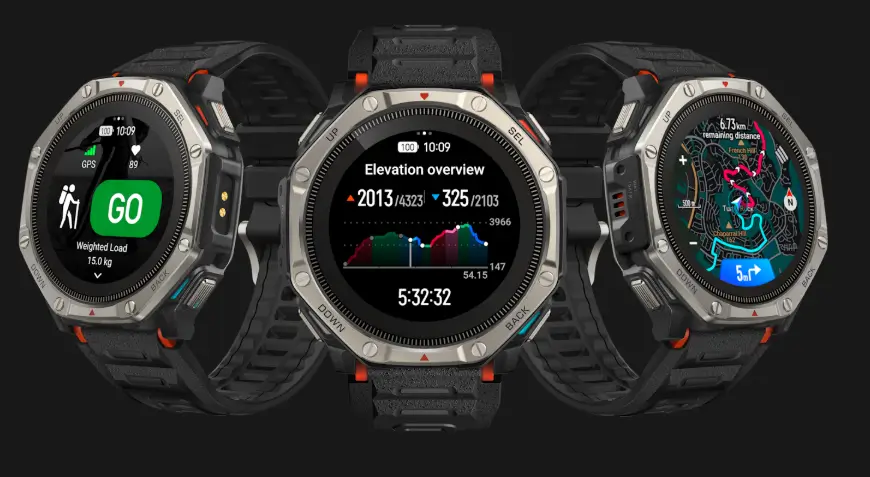
When looking at the rugged outdoor smartwatch market, Amazfit has built an impressive reputation for delivering heavy-duty hardware and deep sports tracking without traditional luxury price tags. For outdoor enthusiasts and athletes navigating the brand’s top-tier catalog, three specific models stand out: the T-Rex Dual Solar, the T-Rex Ultra 2, and the T-Rex 3 Pro. Each of these watches brings something entirely unique to the table, and comparing them side by side reveals how they stack up against each other across every major category.
Comprehensive Technical Specification Comparison
| Feature / Spec | Amazfit T-Rex Dual Solar | Amazfit T-Rex Ultra 2 | Amazfit T-Rex 3 Pro (48mm / 44mm) |
| Official Launch Price | $649.99 / €649.90 | $549.99 / €549.90 | $399.99 / €399.90 |
| Display Size | 1.32 inches | 1.5 inches | 1.5 inches (48mm) / 1.32 inches (44mm) |
| Display Type & Protection | AMOLED with Sapphire Glass | AMOLED with Sapphire Glass | AMOLED with Sapphire Glass |
| Peak Brightness | 3,000 nits | 3,000 nits | 3,000 nits |
| Screen Resolution & PPI | High-resolution circular display | 480 x 480 pixels (322 PPI) | 480 x 480 (322 PPI) / 466 x 466 (353 PPI) |
| Bezel & Case Materials | Grade 5 Titanium bezel, polymer mid-frame, ceramic base | Full Grade 5 Titanium (Bezel, Case Back, Buttons) | Grade 5 Titanium bezel, fiber-reinforced polymer case |
| Dimensions | Large 51.4mm outdoor chassis | 51 x 51 x 14.3 mm | 48 x 48 x 14 mm (48mm) / 44.8 x 44.8 x 13.2 mm (44mm) |
| Weight (Without Strap) | 69 grams | 89.2 grams | 52 grams (48mm) / 46.8 grams (44mm) |
| Power / Charging Tech | Dual-sided photovoltaic solar panels (Front display & rear base) | Standard high-density internal cell | Standard high-density internal cell |
| Battery Capacity | 660 mAh | 870 mAh | 700 mAh (48mm) / 500 mAh (44mm) |
| Typical Battery Life | Up to 25 days (Stretches to 51+ days with solar exposure) | Up to 30 days | Up to 25 days (48mm) / Up to 17 days (44mm) |
| Accurate GPS Battery | Up to 41 hours | Up to 50 hours | Up to 38 hours (48mm) / Up to 26 hours (44mm) |
| Internal Storage | Standard onboard map storage (~26 GB usable) | Massive 64 GB internal storage | Standard onboard map storage |
| GPS & Positioning | Dual-band, 6-satellite positioning systems | Dual-band, 6-satellite positioning systems | Dual-band, 6-satellite positioning systems |
| Offline Mapping | Global offline maps, contour lines, ski trails, and routing | Full offline topo maps, trail navigation, and routing | Global offline maps, contour lines, ski trails, and routing |
| Health Sensors | BioTracker biometric suite, heart rate, SpO2, temp | BioTracker 6.0 PPG biometric sensor suite | BioTracker 6.0 PPG biometric sensor suite |
| Connectivity & Audio | Bluetooth calling, mic, speaker, Wi-Fi, NFC | Bluetooth calling, mic, speaker, Wi-Fi, NFC | Bluetooth calling, mic, speaker, Wi-Fi, NFC |
| Flashlight Type | Built-in LED flashlight with Red night-vision mode | Dual-mode LED flashlight (White & Green night-vision) | Dual-color LED flashlight with Boost Mode |
| Water Resistance | 10 ATM, recreational scuba and freediving down to 50m | 10 ATM, freediving down to 45m, scuba certified | 10 ATM, freediving down to 45m, scuba certified |
| Sports Modes | 180+ sports and hybrid training modes | 180+ sports and hybrid training modes | 180+ sports and hybrid training modes |
| Software Platform | Zepp OS | Zepp OS 5 | Zepp OS 5 |
Pricing and Market Positioning
When it comes to pricing and market placement, the T-Rex Dual Solar sits at the top of the range at $649.99, targeting extreme multi-week expeditions where off-grid power is paramount. Step down slightly in price, and you will find the T-Rex Ultra 2 retailing at $549.99, built as a brute-force structural flagship designed for heavy data storage and extreme backcountry durability. Meanwhile, the T-Rex 3 Pro acts as the value champion of the trio at $399.99, making high-end outdoor navigation much more accessible while offering a lower financial entry barrier.
Build Quality and Display Performance
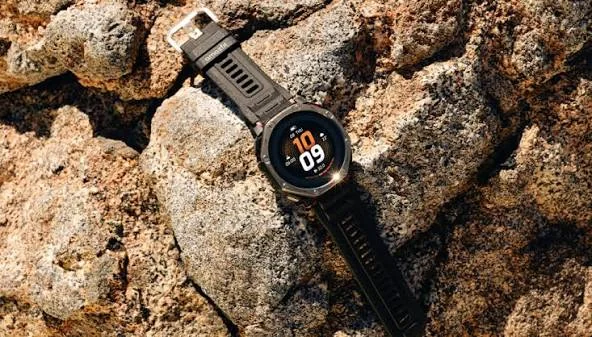
Display and build quality differ significantly across the trio, even though all three share an ultra-tough sapphire crystal glass lens and a brilliant peak brightness of 3,000 nits that makes them effortless to read under direct midday sunlight. The T-Rex Dual Solar features a large 51.4mm case built with a Grade 5 titanium bezel and a unique dual-sided solar charging arrangement with photovoltaic panels on both the front face and the rear ceramic case.
The T-Rex Ultra 2 steps up the structural ruggedness with a full Grade 5 titanium body covering the bezel, case back, and physical buttons while housing a spacious 1.5-inch AMOLED screen. The T-Rex 3 Pro matches that large screen size on its standard 48mm model (which features a titanium bezel) but uniquely gives buyers a choice by offering a smaller 44mm variant for slender wrists.
Battery Life and Power Management
Battery longevity and power management are handled entirely differently across all three devices depending on whether you prefer solar harvesting, brute-force capacity, or standard efficiency. The T-Rex Dual Solar leverages its internal cell and dual solar panels to deliver a typical 25 days of life, which can stretch past 34 days using the front panel and up to an incredible 51 days with active rear solar exposure.
The T-Rex Ultra 2 packs a massive 870 mAh high-density battery that delivers up to 30 days of standard use or over 50 hours of continuous high-accuracy dual-band GPS tracking without needing any sunlight. The T-Rex 3 Pro offers a solid 700 mAh battery on its 48mm version that sustains up to 25 days of typical battery life, scaling down to 17 days on the compact 44mm option.
Sensors, Storage, and Smart Features
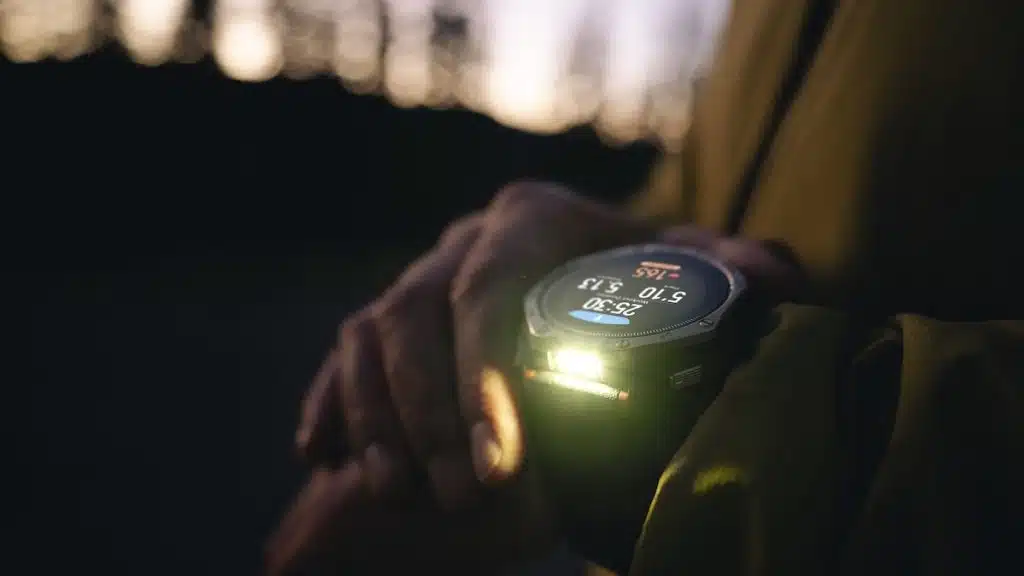
Under the hood, navigation and storage capabilities set these watches apart for serious adventurers, though they share much of the same DNA. The T-Rex Ultra 2 is a powerhouse for map hoarders, featuring a staggering 64 GB of internal storage for extensive offline topographic maps and music files. The T-Rex Dual Solar and T-Rex 3 Pro provide ample standard onboard storage alongside global offline maps, turn-by-turn navigation, and built-in flashlights (with the Pro adding a high-output Boost Mode).
All three watches feature dual-band 6-satellite positioning systems, over 180 sports modes, recreational diving water resistance ratings up to 45–50 meters, built-in speakers and microphones for Bluetooth calling, and the advanced BioTracker sensor suite for tracking heart rate, blood-oxygen levels, and sleep recovery.
Which One Should You Choose?
Choosing the right watch ultimately comes down to your specific outdoor lifestyle and budget. If you are an endurance junkie or backpacker spending weeks away from civilization, the T-Rex Dual Solar is worth the premium price tag for its unmatched sun-harvesting capability.
If your adventures involve harsh mountaineering, deep diving, and storing massive offline topographical map libraries, the T-Rex Ultra 2 is the ultimate tank. However, if you want almost all of the same top-tier mapping, flashlight, and fitness features without spending over $400—or if you need a more comfortable fit for smaller wrists—the T-Rex 3 Pro is the smartest pick in the lineup.
You May Also Like To Check Out: The New and Latest Smartwatches 2026