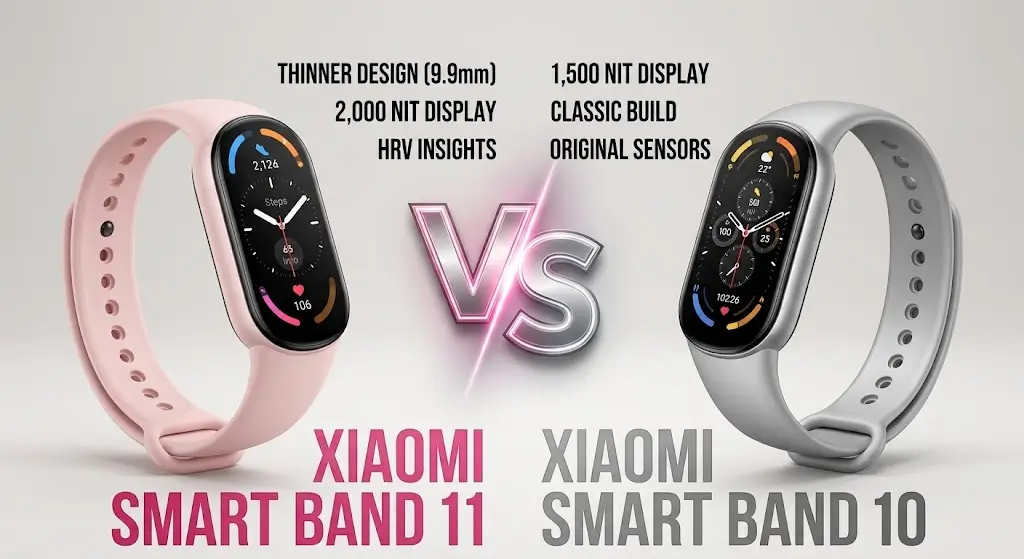
Xiaomi has officially launched the Xiaomi Smart Band 11. The new fitness tracker arrives as the direct successor to last year’s widely popular Xiaomi Smart Band 10, promising a refined experience for fitness enthusiasts and casual users alike. While the core recipe remains familiar—offering weeks of battery life and deep health tracking at a budget price point—Xiaomi has made key structural and display tweaks to keep its flagship band ahead of the competition.
Here is a full breakdown comparing the newly released Xiaomi Smart Band 11 against the Xiaomi Smart Band 10 across design, screen quality, health tracking, software, and battery life.
Key Specifications Comparison
| Feature | Xiaomi Smart Band 11 | Xiaomi Smart Band 10 |
| Display | 1.72-inch 60Hz AMOLED | 1.72-inch 60Hz AMOLED |
| Peak Brightness | 2,000 nits | 1,500 nits |
| Thickness | 9.9 mm | 10.95 mm |
| Weight (Body) | 15.58 g | ~16 g (Aluminum) / 26 g (Ceramic) |
| Battery Life | Up to 21 days | Up to 21 days |
| Operating System | HyperOS 4 | HyperOS |
| Health Sensors | Heart Rate, SpO2, Sleep, Stress, HRV Insights | Heart Rate, SpO2, Sleep, Stress |
| Water Resistance | 5ATM (50m) | 5ATM (50m) |
| Sports Modes | 150+ | 150+ |
Design and Build: Thinner and Lighter Than Ever
The most immediate change when holding the Xiaomi Smart Band 11 is how light it feels on the wrist. Xiaomi managed to shave off over a millimeter of thickness, trimming the band down to a slim 9.9 mm compared to the 10.95 mm frame of the Smart Band 10.
The body weight drops slightly to 15.58 grams. While a fraction of a gram sounds small on paper, it makes a noticeable difference during night wear for sleep tracking or during high-intensity cardio sessions. Both generations retain the pill-shaped capsule design with quick-release strap mechanisms, metal alloy frames, and premium ceramic variants for buyers seeking a stylish watch alternative.
Display: Punching Through Direct Sunlight
Both fitness trackers feature a 1.72-inch AMOLED screen with smooth 60Hz refresh rates and identical 2.0 mm ultra-thin bezels. However, the major leap in the Smart Band 11 comes down to outdoor visibility.
The Smart Band 10 already delivered an impressive 1,500 nits of peak brightness. The Smart Band 11 pushes that ceiling further to 2,000 nits. If you frequently run, cycle, or walk under bright midday sunlight, the boosted luminance makes reading notifications, heart rate zones, and workout stats noticeably easier without shading the display with your hand.
Health Tracking and Features: Heart Rate Variability Takes Center Stage
Both wearables carry over 150 sports modes, 5ATM water resistance for pool swimming, 24/7 heart rate tracking, continuous blood oxygen (SpO2) monitoring, and stress tracking.
The Smart Band 11 upgrades the software experience by introducing Heart Rate Variability (HRV) metrics into its AI-assisted sleep management suite. HRV offers deeper insights into recovery, nervous system stress, and daily readiness, giving users a clearer picture of whether their body is prepared for a hard workout or needs a rest day.
Software and Battery Life: HyperOS 4 and 21-Day Endurance
On the software front, the Smart Band 11 ships out of the box running Xiaomi’s updated HyperOS 4. The interface features smoother animation transitions, refined widget cards, and tighter cross-device notification syncing with both Android and iOS phones.
Despite the thinner design and brighter screen, Xiaomi managed to preserve its benchmark battery endurance. Both the Smart Band 11 and Smart Band 10 boast up to 21 days of battery life under typical daily usage. Even with aggressive tracking settings turned on, users can comfortably expect close to two weeks of uptime between magnetic charging cable snaps.
The Verdict: Should You Upgrade?
The Xiaomi Smart Band 11 isn’t a radical redesign, but rather a polished, thoughtful refinement of an already winning formula.
-
Buy the Smart Band 11 if: You work out outdoors often and need the extra 2,000-nit screen brightness, want a lighter device on your wrist, or value deeper recovery insights like HRV tracking.
-
Stick with the Smart Band 10 if: Your current tracker works well and you primarily use it indoors or for basic step and sleep counts. The core display size and 21-day battery performance remain virtually identical between both generations.
You May Also Like To Check Out: The New and Latest Smartwatches 2026