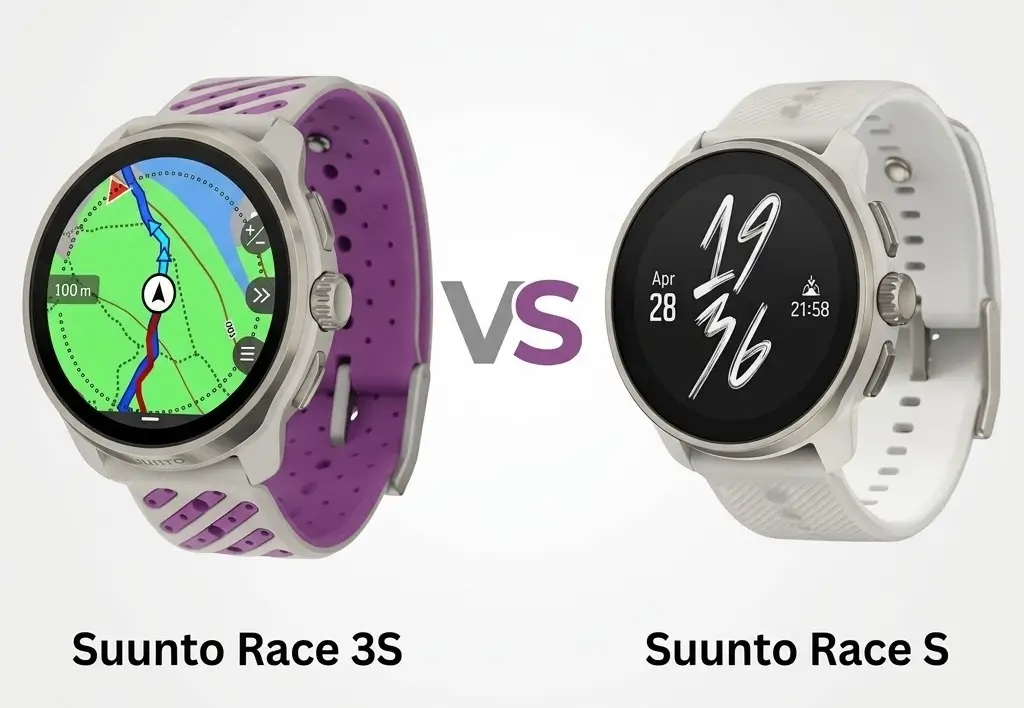
When Suunto launched the Race S in 2024, it gave runners and outdoor athletes a smaller, lighter, and more affordable entry point into the high-performance Suunto Race family. It hit a sweet spot for anyone wanting an outdoor sports watch without a massive block of metal sitting on their wrist.
Now, Suunto is officially back with the Suunto Race 3S. If you have been following our website, you might have already caught the excitement a few days before the official launch, when leaks broke across the web pointing to its arrival—including reports on Suunto Race 3S titanium leaks on European retailer sites and a Suunto Race 3S leak pointing to a mid-October launch and a competitive price tag. Now that the dust has settled and the watch is officially live on Suunto’s website, we finally have the official pricing and specs locked in.
So, how does the brand-new Suunto Race 3S compare to its popular predecessor? Let’s break down every single aspect—from official pricing and display brightness to battery gains and hardware upgrades—so you can decide which watch deserves a spot on your wrist.
1. The Short Answer: Which One Should You Get?
Before we dive deep into the specs, here is the golden rule of thumb:
-
Choose the Suunto Race S if: You want a lightweight, reliable, and more budget-friendly compact performance watch. If your typical training sessions and races finish comfortably within 30 hours of GPS tracking, and you mostly train in everyday daylight where a standard screen is easy to read, the Race S remains an incredible value.
-
Choose the Suunto Race 3S if: You regularly train in blinding midday sun or high-altitude snow glare and need maximum screen visibility. It is also the pick for ultra-runners and heavy adventurers who want extra battery headroom, tougher sapphire glass, a faster processor, an upgraded heart rate sensor, and Suunto’s new AI coaching features.
2. Specification Comparison Table
To give you the complete picture at a glance, here is how the two watches stack up side-by-side:
| Specification | Suunto Race 3S | Suunto Race S |
| Case Size | 46 x 46 x 11.4 mm | 45 x 45 x 11.4 mm |
| Weight | 56 g (with strap) | 53 g (Titanium) / 60 g (Stainless Steel) |
| Case Material | Titanium | Titanium or Stainless Steel |
| Front Glass | Sapphire Crystal | Corning Gorilla Glass |
| Water Resistance | 5 ATM | 5 ATM |
| Display Type | 1.32″ LTPS Hybrid AMOLED | 1.32″ AMOLED |
| Peak Brightness | 2,000 nits | 600 nits |
| Display Resolution | 466 x 466 pixels | 466 x 466 pixels |
| Processor | Apollo 510 | Apollo 4 Plus |
| Optical HR Sensor | 6 LEDs + 4 Photodiodes | 4 LEDs + 2 Photodiodes |
| GPS System | Dual-band (L1 + L5) | Dual-band (L1 + L5) |
| GPS Battery Life | Up to 38 hours (Dual-band) | Up to 30 hours (Dual-band) |
| Daily Battery Life | Up to 12 days | Up to 9 days |
| Storage Capacity | 64 GB | 32 GB |
| Offline Maps | Free worldwide | Free worldwide |
3. Display: 2,000 Nits vs. 600 Nits
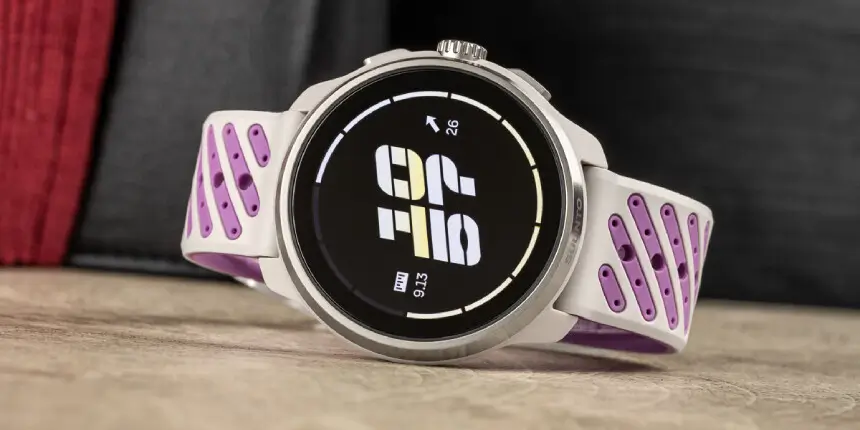
Both watches feature a gorgeous, crisp 1.32-inch AMOLED display with a 466 x 466 resolution. Text, workout metrics, and maps look stunningly sharp on both devices.
However, the real-world difference comes down to brightness.
-
The Race S tops out at 600 nits, which is completely fine for standard running paths and gym workouts.
-
The Race 3S cranks things up to a massive 2,000 nits.
If you have ever tried glancing down at your watch during a blazing summer noon run on an open road, or across a snowy mountain ridge where the glare bounces off every surface, you know how hard it can be to read a dimmer screen. That extra brightness on the Race 3S means you can check your pace instantly mid-stride without squinting.
4. Battery Life: Going Further Between Charges
For endurance athletes and ultra-runners, battery capacity is king.
-
Suunto Race S gives you up to 30 hours of continuous tracking using the high-accuracy dual-band GPS mode, with around 9 days of general daily use.
-
Suunto Race 3S stretches that further, delivering up to 38 hours of dual-band GPS tracking and up to 12 days of daily smartwatch use.
If your weekend long runs or races usually finish well under the 30-hour mark, the Race S is more than enough. But if you are stepping up to longer mountain ultras, stacking heavy training weeks, or simply want to plug in your charger less often, those extra 8 hours of GPS life on the Race 3S provide a comfortable safety net.
5. Build Quality: Sapphire Glass and Refined Materials
Both models are designed to handle rough weather, sweat, and swim sessions with 5 ATM water resistance. But Suunto leveled up the durability of the newer model:
-
Suunto Race S uses tough Corning Gorilla Glass over its screen.
-
Suunto Race 3S swaps that out for sapphire glass, which is remarkably scratch-resistant. If your watch regularly bumps against rough rock faces, trail branches, or gym equipment, the sapphire lens will stay clean and clear much longer.
In terms of weight, the Race 3S hits the scale at 56 grams with its strap, making it just a tiny bit heavier than the titanium Race S (53 grams), but both maintain a compact footprint that feels natural on smaller wrists.
6. Internal Hardware: Processor, Storage, and Heart Rate
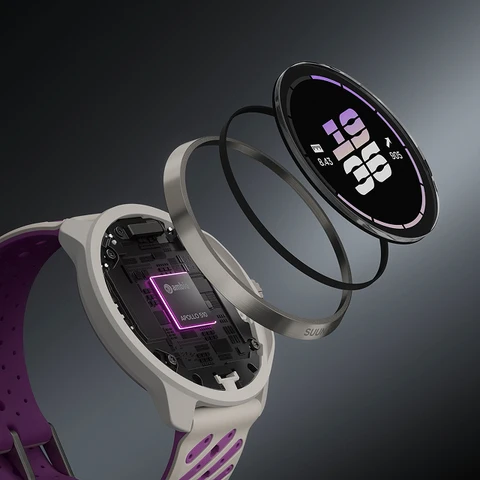
Under the hood, the Race 3S brings meaningful generational bumps:
-
Processor: Powered by the new Apollo 510 chip (an upgrade over the Apollo 4 Plus in the Race S), navigating through menus, zooming in on offline maps, and opening widgets feels noticeably faster and smoother.
-
Storage: Storage is doubled from 32 GB on the Race S to 64 GB on the Race 3S, giving you plenty of room for heavy regional maps and activity logs.
-
Heart Rate Sensor: The optical sensor layout on the back has been upgraded to 6 LEDs and 4 photodiodes (compared to 4 LEDs and 2 photodiodes on the older model). More sensors help capture a steadier, more reliable pulse during rapid interval training, heavy tempo runs, and bumpy descents. (Note: Both watches still support pairing with a chest strap if you want absolute clinical-grade accuracy).
7. What Both Watches Still Share
It is important to remember that Suunto kept all the core features that made the Race family a favorite among athletes in the first place. Whether you choose the Race S or the newer Race 3S, you still get:
-
Free Worldwide Offline Maps: Download high-detail terrain and trail maps directly onto the watch without paying extra subscriptions.
-
Dual-Band GPS (L1 + L5): Pinpoint location tracking even when running between tall city skyscrapers or deep inside steep, tree-covered canyons.
-
Climb Guidance & Sport Modes: Full access to Suunto’s vast ecosystem of sports profiles, training loads, and recovery trackers via the Suunto app.
8. Pricing: What Are You Paying For?
The price gap is one of the most important factors when making your choice:
-
Suunto Race S: Originally launched with an aggressive price tag starting at €349 / $349 for the stainless steel editions, it established itself as one of the most affordable ways to get a premium AMOLED sports watch loaded with offline maps and dual-band GPS.
-
Suunto Race 3S: Now that it is officially out on the Suunto store, it arrives at an official retail price of €499 / $599 for its titanium build—matching right up with what the early pre-launch leaks predicted.
That roughly €150 price difference buys you a heavy list of hardware upgrades: a jump from Gorilla Glass to sapphire crystal, a much brighter 2,000-nit display, double the storage, a newer processor, an extra 8 hours of dual-band GPS battery life, and an upgraded optical heart rate sensor.
The Verdict
If you want to save some cash, the Suunto Race S (officially starting around €349 / $349) remains a brilliant, lightweight, and cost-effective tool for everyday runners. But if you want cutting-edge performance—highlighted by a sun-blasting 2,000-nit display, tougher sapphire protection, a snappier processor, and extended ultra-endurance battery life- the Suunto Race 3S justifies its official €499 / $599 price tag as a powerful next-generation training partner.
You May Also Like To Check Out: The New and Latest Smartwatches 2026